
01
Zero-entry routine reclaim
Automated unloading is designed to remove the need for people to enter a vessel to manually clear remaining product during standard reclaim.
Technology advantages / Safety-led automation
WaveFloor automates the reclaim sequence to help avoid routine manual clean-out inside the silo or vessel. The result is a zero-entry approach to standard unloading, designed to reduce confined-space exposure and maintenance demands.
The WaveFloor difference
When unloading is automated, a worker does not need to enter the storage vessel to shovel or sweep out product as part of the normal reclaim cycle. Fewer planned entries can mean fewer exposures to confined-space hazards and less reliance on manual intervention.
Built for dependable service
Automated. Modular. Low maintenance.
Service requirements depend on material, vessel, and operating conditions; the system is designed to reduce routine clean-out and maintenance effort.
Zero-entry refers to normal reclaim operation. It does not replace required confined-space entry, lockout/tagout, inspection, or maintenance procedures.
Performance by design
Material flow, storage geometry, outlet arrangement, and operating targets all affect system design. WaveFloor evaluates these factors as part of project engineering rather than treating performance as one-size-fits-all.
Understand the sequence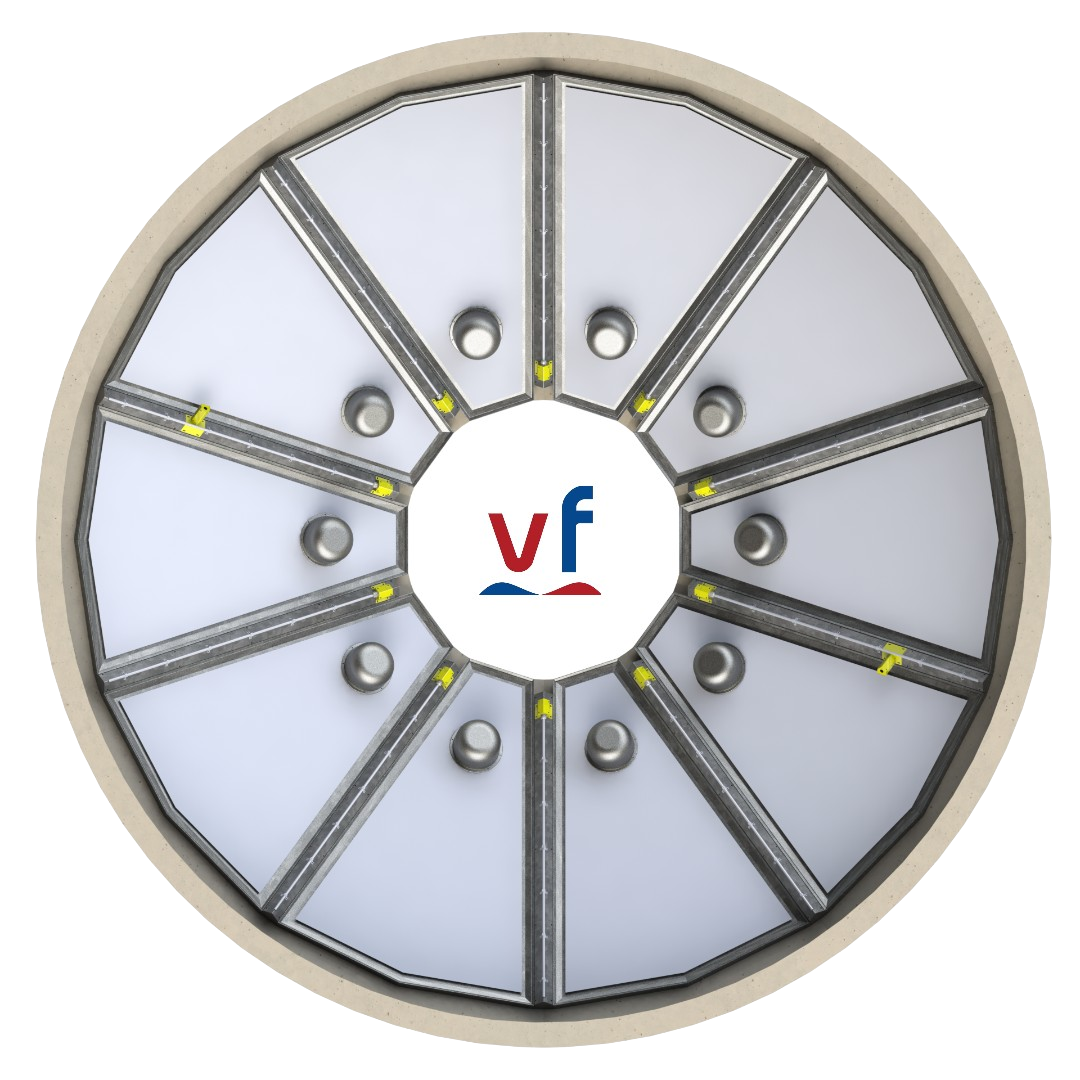
At a glance / System benefits
Automated unloading is designed to remove the need for people to enter a vessel to manually clear remaining product during standard reclaim.
A modular, automated floor is designed for low-maintenance service; inspection and maintenance needs vary by installation and operating conditions.
Sensor-led sequencing is designed to reclaim residual material and reduce the need for a separate manual clean-out step.
Spring-mounted drive units help isolate operating forces from the vessel structure.
The floor works at the base of the pile, helping preserve product integrity and reduce dust.
Independent modules provide a modular architecture, with units designed to operate independently.
Performance depends on product properties, vessel geometry, system configuration, and operating conditions. Project-specific safety procedures and performance targets should be confirmed during engineering.
Next step